एक नजरमा
- Period
- 250 BCE – 500 CE
- Type
- Monasteries & votive stupas
- Span
- 3rd c. BCE – 5th c. CE
- Documented loss
- 16 votive stupas, gone by a later visit
कथा
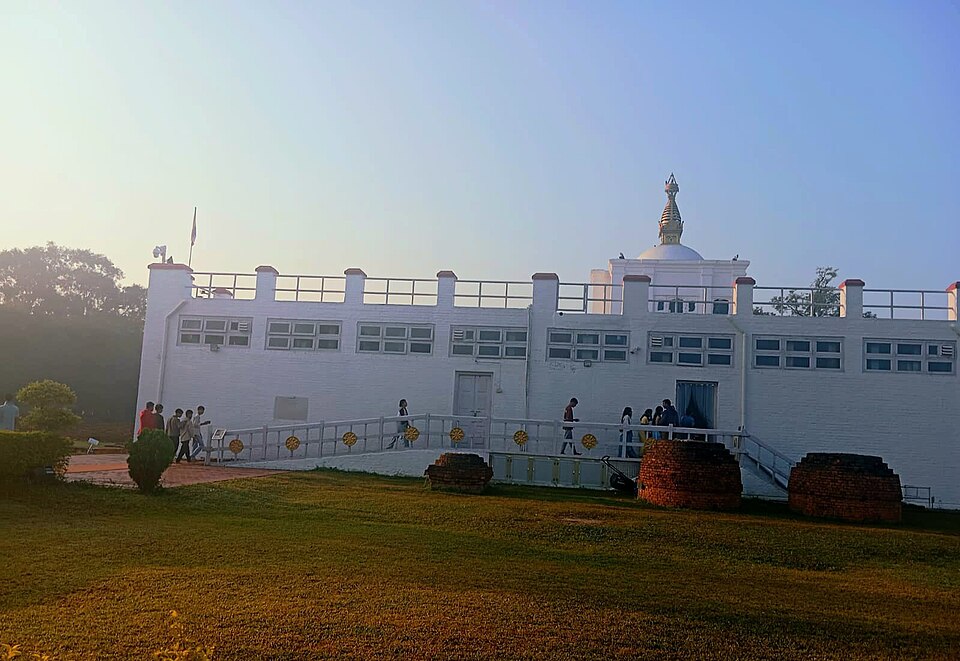
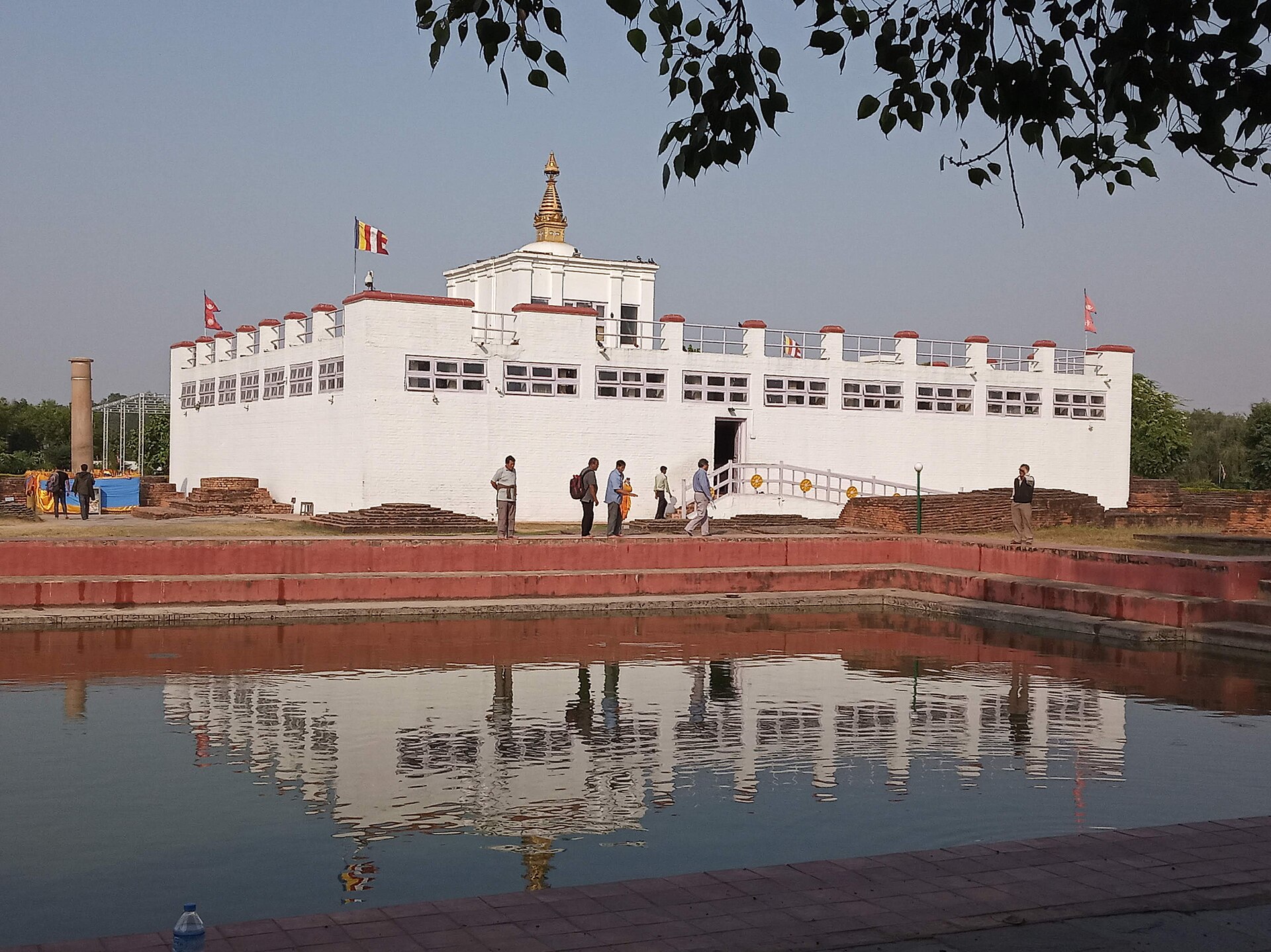
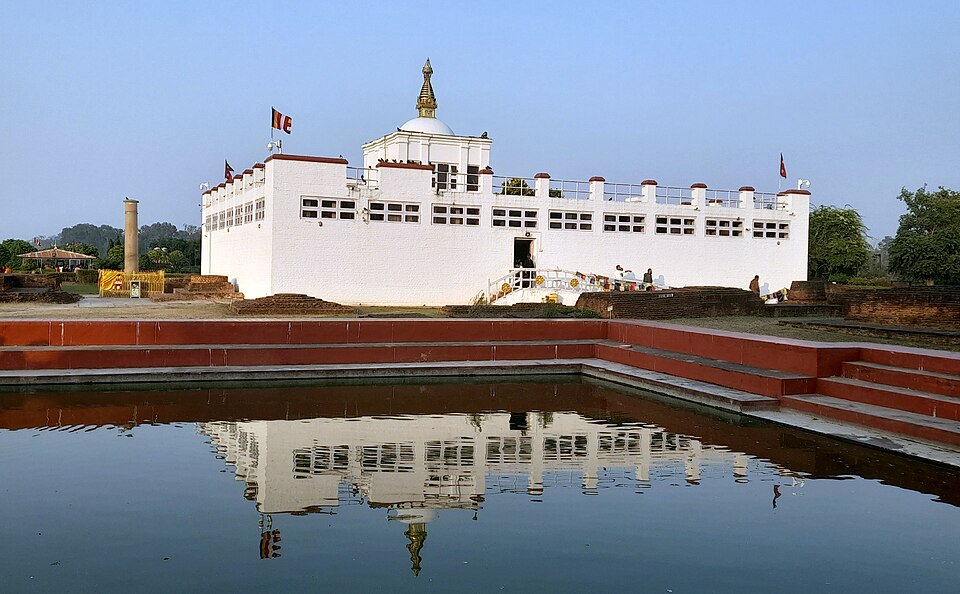
Across the Sacred Garden stand the excavated brick foundations of Buddhist monasteries (vihāras) and votive stupas, built and rebuilt between the 3rd century BCE and the 5th century CE. They are also the site’s clearest warning. Debala Mitra recorded sixteen small votive stupas on a 1957 visit that had, by her later account, been completely demolished, and several structures P. C. Mukherji exposed in 1899 could no longer be traced. It is a documented case of heritage vanishing between two expert visits: the reason a repeatable photographic record matters.
समयक्रममा
1896–1899
Rediscovery
Khadga Shamsher Rana and Anton Führer clear a mound crowned by a shrine to 'Rummini-dei', uncovering the Ashokan pillar and its inscription. P. C. Mukherji surveys and plans the site in 1899, recovering the main part of the Nativity Sculpture.
1933–1939
Reconstruction
Keshar Shumsher excavates the mound and rebuilds the Maya Devi Temple. The work was later criticised by Debala Mitra as unscientific, having damaged or destroyed structures exposed by earlier surveys.
1992–1997
Re-excavation
Renewed excavation exposes the phased brick structures beneath the temple. The Marker Stone is found in 1996, and Lumbini is inscribed on the UNESCO World Heritage List in 1997.
स्रोतहरू
यस पृष्ठको हरेक भनाइ यीमध्ये कुनै एकमा आधारित छ। स्रोतसम्म पुग्न नसकिने तथ्य यो पृष्ठले बोक्दैन।